Prime Minister Benjamin Netanyahu cheapened the memory of the Holocaust in his speech to the United Nations General Assembly on Thursday. He did so twice. Once, when he brandished proof of the very existence of the Holocaust, as if it needed any, and again when he compared Hamas to the Nazis.
If Iranian President Mahmoud Ahmadinejad denies the Holocaust, Netanyahu cheapens it. Is there a need of proof, 60 years later? Or, the world might think, is the denier right? (...)
fonte Haaretz, Gideon Levy
venerdì 25 settembre 2009


lunedì 21 settembre 2009
Jerusalem Diary: Monday 21 September
"Two pandemics are running wild all over the world," he says. "The first is swine flu, the second is 'settlement psychosis'."
fonte BBC News, Middle East, Tim Franks
fonte BBC News, Middle East, Tim Franks
venerdì 18 settembre 2009
Quel sangue del Sud versato per il Paese
Vengo da una terra di reduci e combattenti. E l'ennesima strage di soldati non l'accolgo con la sorpresa di chi, davanti a una notizia particolarmente dolorosa e grave, torna a includere una terra lontana come l'Afghanistan nella propria geografia mentale. Per me quel territorio ha sempre fatto parte della mia geografia, geografia di luoghi dove non c'è pace. Gli italiani partiti per laggiù e quelli che restano in Sicilia, in Calabria o in Campania per me fanno in qualche modo parte di una mappa unica, diversa da quella che abbraccia pure Firenze, Torino o Bolzano.
Dei ventun soldati italiani caduti in Afghanistan la parte maggiore sono meridionali. Meridionali arruolati nelle loro regioni d'origine, o trasferiti altrove o persino figli di meridionali emigrati. A chi in questi anni dal Nord Italia blaterava sul Sud come di un'appendice necrotizzata di cui liberarsi, oggi, nel silenzio che cade sulle città d'origine di questi uomini dilaniati dai Taliban, troverà quella risposta pesantissima che nessuna invocazione del valore nazionale è stato in grado di dargli. Oggi siamo dinanzi all'ennesimo tributo di sangue che le regioni meridionali, le regioni più povere d'Italia, versano all'intero paese. (...)
fonte La Repubblica, Roberto Saviano
Dei ventun soldati italiani caduti in Afghanistan la parte maggiore sono meridionali. Meridionali arruolati nelle loro regioni d'origine, o trasferiti altrove o persino figli di meridionali emigrati. A chi in questi anni dal Nord Italia blaterava sul Sud come di un'appendice necrotizzata di cui liberarsi, oggi, nel silenzio che cade sulle città d'origine di questi uomini dilaniati dai Taliban, troverà quella risposta pesantissima che nessuna invocazione del valore nazionale è stato in grado di dargli. Oggi siamo dinanzi all'ennesimo tributo di sangue che le regioni meridionali, le regioni più povere d'Italia, versano all'intero paese. (...)
fonte La Repubblica, Roberto Saviano
mercoledì 16 settembre 2009
Education gap divides Jerusalem
A recent report by an Israeli non-governmental organisation says 5,000 Palestinian children in East Jerusalem will not be able to attend classes this year because there are not enough classrooms.
The Arab neighbourhoods of East Jerusalem lack more than 1,000 classrooms needed to accommodate schoolchildren, according to the report issued by the Association for Civil Rights in Israel (ACRI) and Ir Amim, an Israeli nonprofit that promotes coexistence in the city.
The widening gap in education between the Arab East and the predominantly Jewish West Jerusalem is all too obvious.
Al Jazeera's Sherine Tadros visited Shaafat Elementary, a school, and found that it was a converted animal barn.
The ACRI report estimates that more than 5,000 would-be students in East Jerusalem are not enrolled in any school.
According to the report, there is a huge discrepancy in the number of schools and quality of education in the Arab East part of Jerusalem, compared to the predominantly Jewish West of the City.
In fact, while the number of public schools in the West is going up. 30,000 Palestinian students in East Jerusalem this year have been forced to attend private schools due to a shortage of at least 1,000 classrooms.
Over 5,000 will not be going to school at all this year.
"There has been a huge increase in the population in East Jerusalem, and that has not been followed by a huge increase in classroom construction," Sarah Kreimer, associate director of Ir Amim, said.
The Jerusalem municipality rejected the report, saying the numbers were "distorted."
Of the nearly 90,000 children between 5 and 18 years old living in East Jerusalem, fewer than half were enrolled in municipal public schools last year, the report said.
Students who do not make it into public school because of the classroom shortage are forced to consider private schools, often at a steep cost, Kreimer said. Some families get priced out, and many students end up at home.
The report also said many existing classrooms were "small, crowded, unventilated and lacking support classes or playgrounds."
Nisreen Elyan, a lawyer for ACRI, told Al Jazeera that the shortage of schools and poor facilities will likely have a long-term social effect on Palestinian children.
"If they're not in school it means they're usually on the streets and they can get into gangs etc which is dangerous," she said.
"Also, it has been shown that once these children are out of the education system it is difficult for them to come back in."
Israeli officials admit there is a huge gap between education systems in the East and West of Jerusalem. They put it down to bureaucratic reasons and the fact that within the municipality few are lobbying on behalf of Palestinian residents.
The Arab neighbourhoods of East Jerusalem lack more than 1,000 classrooms needed to accommodate schoolchildren, according to the report issued by the Association for Civil Rights in Israel (ACRI) and Ir Amim, an Israeli nonprofit that promotes coexistence in the city.
The widening gap in education between the Arab East and the predominantly Jewish West Jerusalem is all too obvious.
Al Jazeera's Sherine Tadros visited Shaafat Elementary, a school, and found that it was a converted animal barn.
The ACRI report estimates that more than 5,000 would-be students in East Jerusalem are not enrolled in any school.
According to the report, there is a huge discrepancy in the number of schools and quality of education in the Arab East part of Jerusalem, compared to the predominantly Jewish West of the City.
In fact, while the number of public schools in the West is going up. 30,000 Palestinian students in East Jerusalem this year have been forced to attend private schools due to a shortage of at least 1,000 classrooms.
Over 5,000 will not be going to school at all this year.
"There has been a huge increase in the population in East Jerusalem, and that has not been followed by a huge increase in classroom construction," Sarah Kreimer, associate director of Ir Amim, said.
The Jerusalem municipality rejected the report, saying the numbers were "distorted."
Of the nearly 90,000 children between 5 and 18 years old living in East Jerusalem, fewer than half were enrolled in municipal public schools last year, the report said.
Students who do not make it into public school because of the classroom shortage are forced to consider private schools, often at a steep cost, Kreimer said. Some families get priced out, and many students end up at home.
The report also said many existing classrooms were "small, crowded, unventilated and lacking support classes or playgrounds."
Nisreen Elyan, a lawyer for ACRI, told Al Jazeera that the shortage of schools and poor facilities will likely have a long-term social effect on Palestinian children.
"If they're not in school it means they're usually on the streets and they can get into gangs etc which is dangerous," she said.
"Also, it has been shown that once these children are out of the education system it is difficult for them to come back in."
Israeli officials admit there is a huge gap between education systems in the East and West of Jerusalem. They put it down to bureaucratic reasons and the fact that within the municipality few are lobbying on behalf of Palestinian residents.
At-Tuwani: La scorta militare israeliana non garantisce la sicurezza dei bambini palestinesi
Settembre 2009
In Palestina l'anno scolastico 2009-2010 è cominciato il I° settembre 2009. I bambini che provengono dai vicini villaggi di Tuba e Maghayir-al-Abeed per raggiungere la scuola elementare di At-Tuwani necessitano di una scorta militare che garantisca loro la sicurezza. Durante le prime due settimane del nuovo anno scolastico i soldati israeliani non hanno scortato i bambini in modo appropriato, lasciando che percorressero da soli un'area nella quale sono esposti agli attacchi dei coloni. (...)
fonte Operazione Colomba, l'articolo intero qui
Per il report completo sulle scorte scolastiche nel 2007-2008, incluse mappe, fotografie e interviste ai bambini, consultare "Un viaggio pericoloso".
In Palestina l'anno scolastico 2009-2010 è cominciato il I° settembre 2009. I bambini che provengono dai vicini villaggi di Tuba e Maghayir-al-Abeed per raggiungere la scuola elementare di At-Tuwani necessitano di una scorta militare che garantisca loro la sicurezza. Durante le prime due settimane del nuovo anno scolastico i soldati israeliani non hanno scortato i bambini in modo appropriato, lasciando che percorressero da soli un'area nella quale sono esposti agli attacchi dei coloni. (...)
fonte Operazione Colomba, l'articolo intero qui
Per il report completo sulle scorte scolastiche nel 2007-2008, incluse mappe, fotografie e interviste ai bambini, consultare "Un viaggio pericoloso".
martedì 15 settembre 2009
How does Israel decide who gets a visa to Ramallah?
Haaretz's query as to why some visitors receive regular visas, while others receive "Palestinian Authority only" stamps, went unanswered. (...)
The Interior Ministry said it does not have representatives at the Allenby Bridge crossing.
The Israel Airports Authority said, "Israel Airports Authority employees fulfill their function in keeping with directives while maintaining the dignity of the travelers and insuring a proper level of service. The authority supervises the employees by means of a variety of methods. Stamps are given by border supervisors only (who are not authority employees)."
The Negotiation Support Unit, which advises the PLO's Negotiations Affairs Department, prepared an opinion paper on the Israeli visa policy, which was sent to consulates and foreign missions. The opinion stated: "Third states whose nationals are subjected to such illegal policies have an obligation to object once the facts are made known to them and their nationals ask them to respond or to take action. Choosing not to object would imply third states' acceptance of Israel's unlawful acts, in violation of third states' duty of non-recognition [of these acts.]"
fonte Haaretz, Amira Hass, How does Israel decide who gets a visa to Ramallah?
The Interior Ministry said it does not have representatives at the Allenby Bridge crossing.
The Israel Airports Authority said, "Israel Airports Authority employees fulfill their function in keeping with directives while maintaining the dignity of the travelers and insuring a proper level of service. The authority supervises the employees by means of a variety of methods. Stamps are given by border supervisors only (who are not authority employees)."
The Negotiation Support Unit, which advises the PLO's Negotiations Affairs Department, prepared an opinion paper on the Israeli visa policy, which was sent to consulates and foreign missions. The opinion stated: "Third states whose nationals are subjected to such illegal policies have an obligation to object once the facts are made known to them and their nationals ask them to respond or to take action. Choosing not to object would imply third states' acceptance of Israel's unlawful acts, in violation of third states' duty of non-recognition [of these acts.]"
fonte Haaretz, Amira Hass, How does Israel decide who gets a visa to Ramallah?
lunedì 14 settembre 2009
cleaning (and start again)

troppo tempo lontana da questo blog... ma mai lontana da quanto avviene in Medio Oriente, dagli amici in Palestina e Israele, da chi ancora spera in un soluzione di pace.
Adesso ripulisco il blog (dalle cose inutili), provo ad allegerirlo, e si riparte!
lunedì 30 marzo 2009
Land Day
The people in Palestine are mobilizing for the 32nd annual commemoration of Land Day, happening March 30.
Today, the Land Day protests of the people in Palestine and around the world are focused on the Palestinian call for Boycott, Divestment and Sanctions. The call for a global day of action on March 30 came out of the World Social Forum in Belem (Brazil) and aims to promote BDS as the most effective tool to stop Israeli policies of land theft and colonization and the discrimination, massacres and ethnic cleansing that have been carried out against the Palestinian people in pursuit of these goals.
Actions all across historic Palestine tie the ongoing defense of Palestinian land and agriculture from the Wall and settlement project to the call for boycott of Israeli products and institutions. Where farming becomes a form of resistance, choosing Palestinian over Israeli products is an essential part of the Palestinian struggle for justice, freedom, and return. Where a people is besieged, bombed and starved with the complicity of governments around the world, the call for global BDS becomes an essential tool to break the siege.
Fonte Stop the Wallmercoledì 4 marzo 2009
closed zone
During the past 18 months, Israel tightened its closure of Gaza, almost completely restricting the passage of goods and people both to and from the Strip.
These policies punish innocent civilians with the goal of exerting pressure on the Hamas government, violating the rights of 1.5 million people who seek only to live ordinary lives – to be reunited with family, to pursue higher education, to receive quality medical treatment, and to earn a living.
The effects of the closure were particularly harsh during the military operation of Dec. 2008 - Jan. 2009. For three weeks, Gaza residents had nowhere to flee to escape the bombing.
Gisha - Legal Center for Freedom of Movement calls on the State of Israel to fully open Gaza's crossings and to allow the real victims of the closure - 1.5 million human beings - the freedom of movement necessary to realize their dreams and aspirations.
venerdì 13 febbraio 2009
M'illumino di meno 2009
 M’ILLUMINO DI MENO 2009
Giornata del Risparmio Energetico - 13 febbraio 2009 -
Per il quinto anno consecutivo Caterpillar lancia per il 13 febbraio 2009 M’illumino di meno, la grande giornata di mobilitazione internazionale in nome del risparmio energetico. Dopo il successo delle passate edizioni, i conduttori Cirri e Solibello chiederanno nuovamente agli ascoltatori di dimostrare che esiste un enorme, gratuito e sotto utilizzato giacimento di energia pulita: il risparmio.
L’invito rivolto a tutti è quello di spegnere luci e dispositivi elettrici non indispensabili il 13 febbraio 2009 dalle ore 18.
M’ILLUMINO DI MENO
Energy Saving Day - 13 February 2009 -
The initiative was first launched by Caterpillar, a popular and successful live radio program which reaches more than a million listeners per day. Caterpillar is broadcast by Radio2, the entertaining channel of RAI, the Italian Public Service Broadcaster. The program airs from 6pm to 7:30pm, Monday to Friday and deals with major issues and themes in the world in an informal and ironic way underlining contradictions and paradoxes in our society.
mercoledì 4 febbraio 2009
Educare a Gaza
Il documentario di Alessia Del Bianco e Nicola Gencarelli, voluto da Educaid Onlus, associazione per la cooperazione internazionale in campo educativo, racconta la vita e il lavoro di un gruppo di educatori palestinesi impegnati per promuovere la pace, il coraggio civile e i diritti dei bambini nella Striscia di Gaza, un lembo di terra palestinese circondato dallo Stato dIsraele. Nonostante la sua estensione (45 chilometri di lunghezza per 7 di larghezza) la Striscia di Gaza ospita più di 1 milione e mezzo di persone, la maggior parte delle quali ha meno di 18 anni.
Il documentario è stato girato in un momento di forte tensione dovuta ai bombardamenti, alla chiusura delle frontiere e allembargo sullelettricità e sui beni di prima necessità. Nonostante questo, le persone che abbiamo incontrato, che ci hanno ospitato nelle loro case e che ci hanno mostrato il loro lavoro hanno voluto raccontare la necessità di costruire, nonostante tutto, un futuro per i bambini di Gaza"
Chi è interessato a una copia DVD del documentare può scrivere a info@educaid.it
venerdì 30 gennaio 2009
Every family has a story, here are some of them
There are many stories. Each account -- each murdered individual, each wounded person, each burned-out and broken house, each shattered window, trashed kitchen, strewn item of clothing, bedroom turned upside down, bullet and shelling hole in walls, offensive Israeli army graffiti -- is important. (...)
fonte Eva Bartlett for EI
fonte Eva Bartlett for EI
martedì 27 gennaio 2009
Giornata della memoria
Legge 20 luglio 2000, n. 211
Istituzione del "Giorno della Memoria" in ricordo dello sterminio e delle persecuzioni del popolo ebraico e dei deportati militari e politici italiani nei campi nazisti
Art. 1.1.
La Repubblica italiana riconosce il giorno 27 gennaio, data dell’abbattimento dei cancelli di Auschwitz, "Giorno della Memoria", al fine di ricordare la Shoah (sterminio del popolo ebraico), le leggi razziali, la persecuzione italiana dei cittadini ebrei, gli italiani che hanno subìto la deportazione, la prigionia, la morte, nonché coloro che, anche in campi e schieramenti diversi, si sono opposti al progetto di sterminio, ed a rischio della propria vita hanno salvato altre vite e protetto i perseguitati.Auschwitz fu il più grande campo di sterminio. Si calcola che solo in quel luogo vennero uccise fino a un milione e 300mila persone, il 90% delle quali ebree. I nazisti perseguitarono, oltre agli ebrei, anche zingari, serbi, testimoni di Geova, omosessuali, oppositori al regime di tutte le nazionalità, delinquenti abituali, slavi, malati di mente, disabili, mendicanti e vagabondi. (da Melitonline)
lunedì 26 gennaio 2009
fosforo bianco/white phosphorus
fosforo bianco/white phosphorus
"La mia famiglia distrutta dal fosforo" i superstiti raccontano le armi proibite (la Repubblica)
Israel accused of war crimes (Al Jazeera English)
Israeli PM in war crimes pledge (BBC News)
Alarm spreads over use of lethal new weapons (Electronic Intifada)
"La mia famiglia distrutta dal fosforo" i superstiti raccontano le armi proibite (la Repubblica)
Israel accused of war crimes (Al Jazeera English)
Israeli PM in war crimes pledge (BBC News)
Alarm spreads over use of lethal new weapons (Electronic Intifada)
sabato 24 gennaio 2009
The next step
Not since the summer of 1967 have we had such a uniform, brainwashed chorus - and back then it was not so nationalist and bestial, insensitive and blind. But now, as the dust clears over the ruins and there are not enough bandages to cover all the wounds; with the cemeteries full and the hospitals bursting; as the cripples, the incapacitated, the amputees, the traumatized and the bereaved, the thousands of wounded and tens of thousands of newly homeless try helplessly to rehabilitate whatever they can, the time has come to respond and say what can be done. Now it is time to elaborate on the alternative to the cruelest and most brutal war in Israel's history, and one of the most unnecessary. (...)
fonte Gideon Levy, Haaretz
fonte Gideon Levy, Haaretz
domenica 18 gennaio 2009
The IDF has no mercy for the children in Gaza nursery schools
A significant majority of the children killed in Gaza did not die because they were used as human shields or because they worked for Hamas. They were killed because the IDF bombed, shelled or fired at them, their families or their apartment buildings. That is why the blood of Gaza's children is on our hands, not on Hamas' hands, and we will never be able to escape that responsibility.
The children of Gaza who survive this war will remember it. It is enough to watch Nazareth-born Juliano Mer Khamis' wonderful movie "Arna's Children" to understand what thrives amid the blood and ruin we are leaving behind. The film shows the children of Jenin - who have seen less horror than those of Gaza - growing up to be fighters and suicide bombers.
A child who has seen his house destroyed, his brother killed and his father humiliated will not forgive.
fonte Gideon Levy, Haaretz
The children of Gaza who survive this war will remember it. It is enough to watch Nazareth-born Juliano Mer Khamis' wonderful movie "Arna's Children" to understand what thrives amid the blood and ruin we are leaving behind. The film shows the children of Jenin - who have seen less horror than those of Gaza - growing up to be fighters and suicide bombers.
A child who has seen his house destroyed, his brother killed and his father humiliated will not forgive.
fonte Gideon Levy, Haaretz
giovedì 15 gennaio 2009
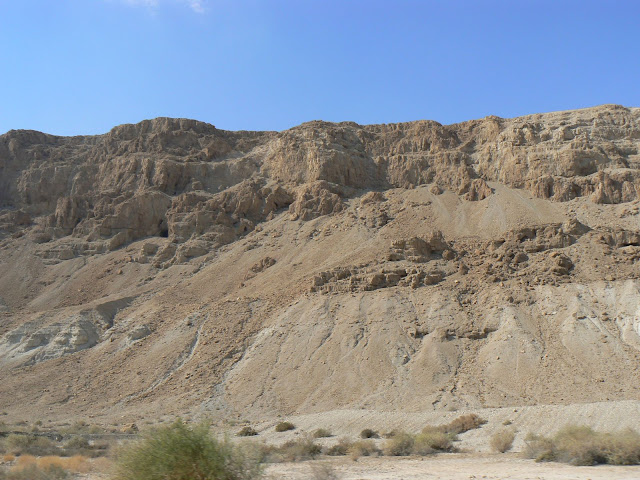
El Desierto
He venido al desierto pa' reirme de tu amor
Que el desierto es más tierno y la espina besa mejor
He venido a este centro de la nada pa' gritar,
Que tú nunca mereciste lo que tanto quise dar...
He venido yo corriendo, olvidándome de ti,
Dame un beso pajarillo no te asustes colibrí
He venido encendida al desierto pa' quemar,
Porque el alma prende fuego cuando deja de amar
Lhasa De Sela
... già un anno è passato ...
domenica 11 gennaio 2009
Gaza: delegazione Ue torna in Egitto
''Forzando la volonta' delle autorita' israeliane, che fino all'ultimo non volevano lasciarci passare'', una delegazione del Parlamento Europeo, guidata dalla vicepresidente Luisa Morgantini piu' il senatore italiano Alberto Maritati, e' entrata oggi dall'Egitto nella Striscia di Gaza attraverso il valico di Rafah e vi si e' trattenuta per circa due ore.
''Siamo rimasti piu' o meno per la durata della tregua - ha detto al telefono Morgantini all'Ansa - che non e' stata neppure rispettata perche' bombe degli aerei israeliani sono cadute a poche centinaia di metri dall'edificio dell'Onu nel quale eravamo''.
Morgantini e Maritati, in contatto attraverso sms con l'Ansa del Cairo, hanno fornito dettagli della visita quasi minuto per minuto, da quando il pullmino dell'agenzia Onu per i rifugiati palestinesi, l'Unrwa, ha preso a bordo la delegazione accompagnandola nel settore palestinese della citta' di confine di Rafah. Mentre erano negli uffici Unrwa sono cadute alcune bombe lanciate dai caccia israeliani, a meno di un chilometro: ''La gente corre in preda al terrore e urlando, forse per sfogare la paura'', ha scritto Maritati in uno degli sms. In un altro di Morgantini: ''Abbiamo fatto in tempo a vedere la distruzione provocata dalle bombe, case rase al suolo, auto, macerie dappertutto, anche accanto alla scuola dell'Unrwa, che e' stata pure danneggiata''.
Morgantini ha poi affermato che l'Unrwa ha ''pochissimo da distribuire: una confezione di pannolini per bambini e' stata divisa in singoli pacchetti, perche' non ce n'e' abbastanza. Cosi' come manca il latte in polvere. Non bisogna dimenticare che la popolazione della Striscia e' di circa un milione e mezzo di persone e i soccorsi arrivati non bastano''.
I tunnel che i bombardamenti israeliani distruggono - ha rilevato - se e' vero che permettevano di portare armi, consentivano anche un'economia di sopravvivenza nella Striscia, i cui passaggi sono bloccati da cosi' tanto tempo''.
''Questa guerra e' una follia piu' grave di altre perche' i due avversari si combattono in uno scontro impari - ha detto Maritati - in mezzo alle case e gente e bambini che muoiono in continuazione. La comunita' internazionale non puo' rimanere ferma a guardare''. Morgantini ha confermato che al rientro a Strasburgo i dati raccolti nella visita saranno riferiti al parlamento europeo ''perche' il mondo sappia che cosa sta veramente succedendo''.
fonte Ansa
''Siamo rimasti piu' o meno per la durata della tregua - ha detto al telefono Morgantini all'Ansa - che non e' stata neppure rispettata perche' bombe degli aerei israeliani sono cadute a poche centinaia di metri dall'edificio dell'Onu nel quale eravamo''.
Morgantini e Maritati, in contatto attraverso sms con l'Ansa del Cairo, hanno fornito dettagli della visita quasi minuto per minuto, da quando il pullmino dell'agenzia Onu per i rifugiati palestinesi, l'Unrwa, ha preso a bordo la delegazione accompagnandola nel settore palestinese della citta' di confine di Rafah. Mentre erano negli uffici Unrwa sono cadute alcune bombe lanciate dai caccia israeliani, a meno di un chilometro: ''La gente corre in preda al terrore e urlando, forse per sfogare la paura'', ha scritto Maritati in uno degli sms. In un altro di Morgantini: ''Abbiamo fatto in tempo a vedere la distruzione provocata dalle bombe, case rase al suolo, auto, macerie dappertutto, anche accanto alla scuola dell'Unrwa, che e' stata pure danneggiata''.
Morgantini ha poi affermato che l'Unrwa ha ''pochissimo da distribuire: una confezione di pannolini per bambini e' stata divisa in singoli pacchetti, perche' non ce n'e' abbastanza. Cosi' come manca il latte in polvere. Non bisogna dimenticare che la popolazione della Striscia e' di circa un milione e mezzo di persone e i soccorsi arrivati non bastano''.
I tunnel che i bombardamenti israeliani distruggono - ha rilevato - se e' vero che permettevano di portare armi, consentivano anche un'economia di sopravvivenza nella Striscia, i cui passaggi sono bloccati da cosi' tanto tempo''.
''Questa guerra e' una follia piu' grave di altre perche' i due avversari si combattono in uno scontro impari - ha detto Maritati - in mezzo alle case e gente e bambini che muoiono in continuazione. La comunita' internazionale non puo' rimanere ferma a guardare''. Morgantini ha confermato che al rientro a Strasburgo i dati raccolti nella visita saranno riferiti al parlamento europeo ''perche' il mondo sappia che cosa sta veramente succedendo''.
fonte Ansa
venerdì 9 gennaio 2009
Latest strikes target family homes - Official toll reaches 781
In 110 ammassati in una casa e bombardati
l'Onu denuncia il massacro di 30 civili
Ammassati in casa e poi bombardati. Sono morti così almeno una trentina di palestinesi in un'unica casa a Zeitoun, quartiere a sud di Gaza City. "Uno dei più gravi episodi dall'inizio delle operazioni", denunciano le Nazioni Unite. Le vittime del bombardamento del quartiere arriverebbero almeno a cinquanta. Tra le macerie si cercano ancora decine di dispersi, secondo i soccorritori il bilancio è destinato a salire.
fonte La Repubblica
UN: Israeli troops concentrated Gazans in one building before killing them
The United Nations has collected witness testimony indicating that Israeli forces shelled a house in which Israeli troops had crowded 110 Palestinians a day earlier in the Zaytoun neighborhood of Gaza City.
from Ma'an News Agency
l'Onu denuncia il massacro di 30 civili
Ammassati in casa e poi bombardati. Sono morti così almeno una trentina di palestinesi in un'unica casa a Zeitoun, quartiere a sud di Gaza City. "Uno dei più gravi episodi dall'inizio delle operazioni", denunciano le Nazioni Unite. Le vittime del bombardamento del quartiere arriverebbero almeno a cinquanta. Tra le macerie si cercano ancora decine di dispersi, secondo i soccorritori il bilancio è destinato a salire.
fonte La Repubblica
UN: Israeli troops concentrated Gazans in one building before killing them
The United Nations has collected witness testimony indicating that Israeli forces shelled a house in which Israeli troops had crowded 110 Palestinians a day earlier in the Zaytoun neighborhood of Gaza City.
from Ma'an News Agency
giovedì 8 gennaio 2009
Lucky my parents aren't alive to see this
"My parents despised all their everyday activities - stirring sugar into coffee, washing the dishes, standing at a crosswalk - when in their mind's eye they saw, based on their personal experience, the terror in the eyes of children, the desperation of mothers who could not protect their young ones, the moment when a huge explosion dropped a house on top of its inhabitants and a smart bomb struck down entire families."
fonte Amira Hass, Haaretz
fonte Amira Hass, Haaretz
Iscriviti a:
Post (Atom)


